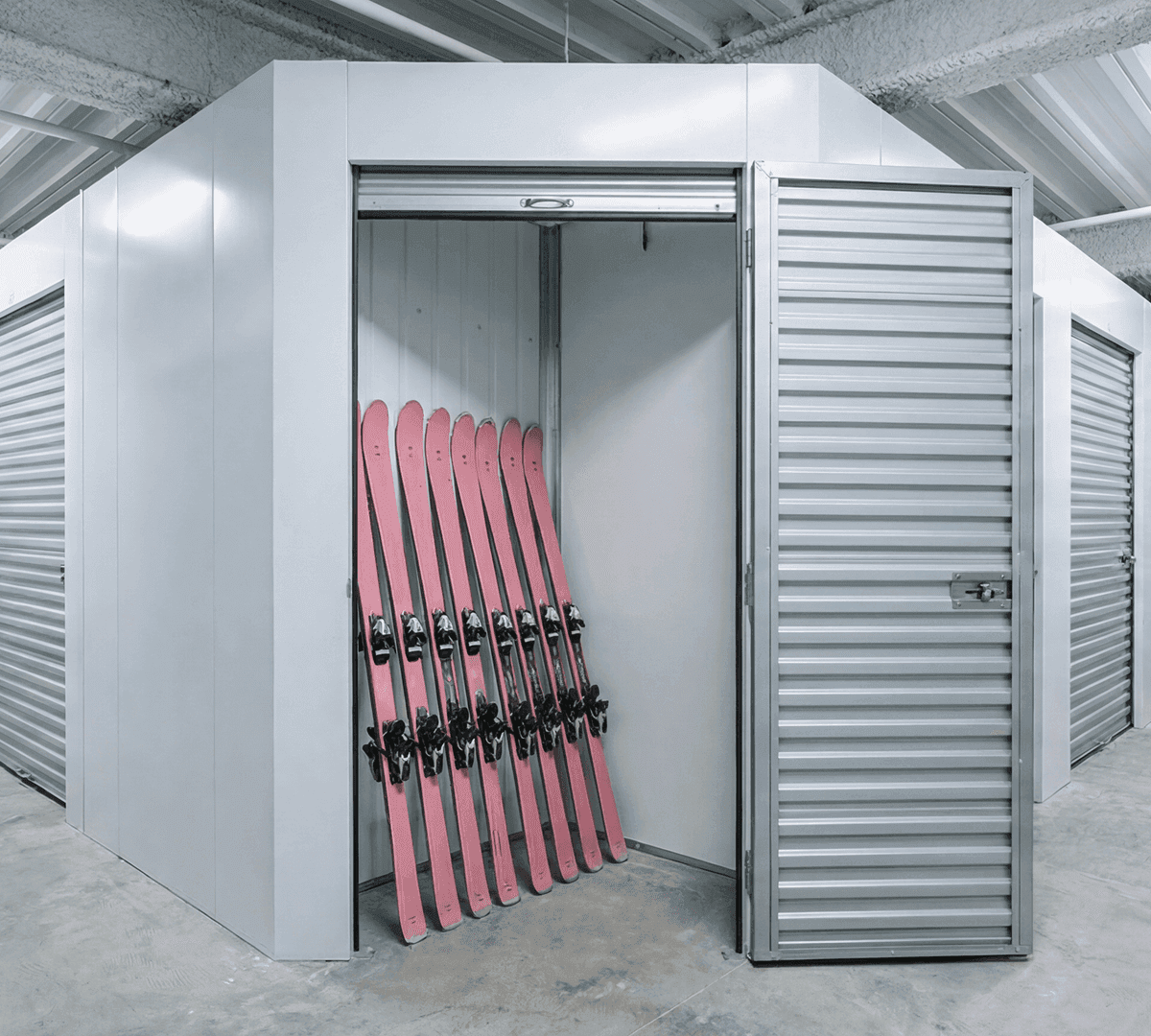

To store skis and snowboards, wipe them clean, dry the edges completely, coat the bases with a layer of storage wax, and keep them somewhere cool, dry and out of direct sun, either upright on their tails or flat on a rack. Never store them wet, in a sealed bag or next to a heater. Moisture rusts the edges, and heat can damage the core and bases.
Most ski storage advice assumes you have a garage and only care about summer. In NYC, the harder problem is the season itself: a pair of skis, boots, poles and a helmet take over a small apartment from December to March, then need a safe place to sit until next winter. This guide covers both, how to store skis and snowboards during the season and how to put them away for the summer.
How to store skis and snowboards during the season
Between trips, the goal is to get gear dry and keep it out of your way.
- Dry everything after every trip. Wipe snow and water off the bases, topsheets and especially the steel edges, then let skis or your board air-dry at room temperature before you put them away.
- Keep them away from radiators. NYC steam heat is too hot for drying gear. Direct heat can warp boot shells and damage bases.
- Take boot liners out to dry. Pull the liners and let them air out overnight, or use a boot dryer on a low setting.
- Don't leave gear in the car. Melting snow inside a ski bag rusts edges, and a car is an easy target for theft.
- Store upright on the tails, or flat on a rack, wherever they won't be knocked over.
Where to keep ski gear in a small NYC apartment
In-season gear needs to be easy to grab, which usually means a closet corner, a vertical wall rack or a spot behind the door. If there is truly no room, a storage unit near home works for in-season gear too, as long as you can get to it at the hour you leave. Early-morning ski buses and pre-dawn drives to the Catskills, the Poconos or northern New Jersey are the norm, so access hours matter as much as distance.
Gear without the clutter: Urban Stash units in the East Village and Williamsburg are open 24/7, so you can grab your skis at 5 a.m. on the way to the bus and drop them back off on Sunday night.
How to store skis for the summer
End-of-season storage is when skis get damaged, because they sit for six months or more. Before you put them away in spring:
1. Clean them. Wipe dirt, road salt and grime off the bases and topsheets with a damp cloth, then dry thoroughly.
2. Dry and check the edges. Water left on steel edges turns into rust over the summer. If you see rust spots, have them taken care of at a tune or remove them with a gummy stone.
3. Apply storage wax. Iron on a thick layer of wax and do not scrape it. It seals the base from drying out and protects the edges. Scrape and brush before your first day next season.
4. Check your bindings. Some technicians recommend backing off the binding springs over the summer; many manufacturers say it isn't necessary. Follow your binding maker's guidance, and if you do adjust them, have them reset by a shop before you ski.
5. Strap loosely. Use a soft ski strap or a rack. Strapping bases tightly together for months keeps the camber compressed.
6. Store them cool, dry and dark. Out of direct sun, off a damp floor and away from heaters, upright on the tails or flat on a rack, with nothing heavy stacked on top. Avoid sealing skis in plastic or a damp ski bag over the summer. Trapped moisture is what causes rust. If you use a bag, make sure the skis and the bag are fully dry and leave it partly unzipped.
How to store a snowboard
Snowboards follow the same rules, with a few differences:
- Clean, dry and wax the base with a thick layer of storage wax, and dry the edges completely.
- Loosen the binding straps so the padding and ratchets are not under tension for months. Some riders remove bindings entirely for summer storage.
- Store it flat, on a wall mount, or upright on the tail. Do not lean it on its edge with weight on it or stack heavy items on the board, which can affect the camber over time.
- Keep it away from heat and sun. Heat can damage the core and topsheet, and UV fades graphics.
How to store ski and snowboard boots
- Pull the liners and let liners and shells dry completely.
- Put the liners back and buckle the boots loosely. Buckling helps the shell hold its shape; cranking the buckles down tight is not necessary.
- Store them at room temperature. Plastic shells can deform in a hot space.
- Clean and dry helmets and goggles, and keep goggles in a soft bag so the lenses do not scratch.
Will skis or a snowboard fit in a storage unit?
Need storage?
Check available Urban Stash units near you.
Most adult skis are about 160–190 cm (5.2–6.2 feet) long, and most snowboards are about 140–165 cm (4.6–5.4 feet). That makes height and length the deciding factor. Every Urban Stash listing shows exact dimensions before you book.
- Williamsburg small: Most skis and snowboards fit lying flat on the diagonal (about 7 feet corner to corner), with room for boots and a helmet.
- East Village small: Too short for most skis and snowboards. A good fit for boots, helmets, goggles and other accessories.
- Medium units at either location: Skis and boards stand upright, with room for poles, boots, bags and more than one person's gear.
Storing gear for the whole household, or skis plus a bike or summer gear? A medium unit is usually the better fit. Compare options in our storage size guide.
Frequently asked questions
How should you store skis in the off-season?
Clean and dry them, make sure the edges are completely dry, apply a thick coat of storage wax without scraping it, and store them in a cool, dry place out of direct sun, either upright on their tails or flat on a rack.
Should skis be stored vertically or horizontally?
Either works. Store skis upright on their tails or horizontally on a rack, as long as nothing heavy rests on them and they cannot fall over.
Do you need to loosen ski bindings for storage?
Opinions differ. Some ski technicians recommend backing off the springs for long-term storage, while many binding manufacturers say it is unnecessary. Follow your binding maker's guidance, and have a shop reset bindings to your settings if you change them.
Should you store skis with wax on them?
Yes. A thick, unscraped coat of storage wax protects the bases from drying out and helps keep the edges from rusting. Scrape it off before your first day on snow.
What is the best way to store a snowboard?
Clean, dry and wax the base, loosen the binding straps, and store the board flat, on a wall mount or upright on its tail, away from heat and direct sun.
Can you store skis in a cold place?
Cold is not the problem; moisture and temperature swings are. A dry space with steady temperatures is better than a damp garage or basement, and gear should always go into storage dry.
Where can you store skis in a NYC apartment?
A closet corner, a vertical wall rack or a spot behind a door works during the season. For summer, or if you have no room, a nearby storage unit keeps skis out of the apartment. Look for one with 24/7 access if you want to use it for early-morning trips.
Store your ski gear close to home
Keep skis, boards and boots out of your apartment and still get to them for a 5 a.m. departure. Urban Stash has neighborhood storage in the East Village and Williamsburg with 24/7 access from your phone, month-to-month terms and no security deposit. Use it all winter, then keep your gear there through the summer.
Ready for more room?
Find a storage unit that fits your stuff
Browse available units, compare sizes, and reserve online in a few minutes.
Written by
Urban Stash Team
Storage notes, city-living ideas, and practical ways to make more room for what matters.