
No car? No problem. Here's how NYC renters can find neighborhood self-storage that's actually close to home — no Uber or Zipcar, no wasted weekends, no sketchy warehouses required.
The NYC Storage Problem Nobody Talks About
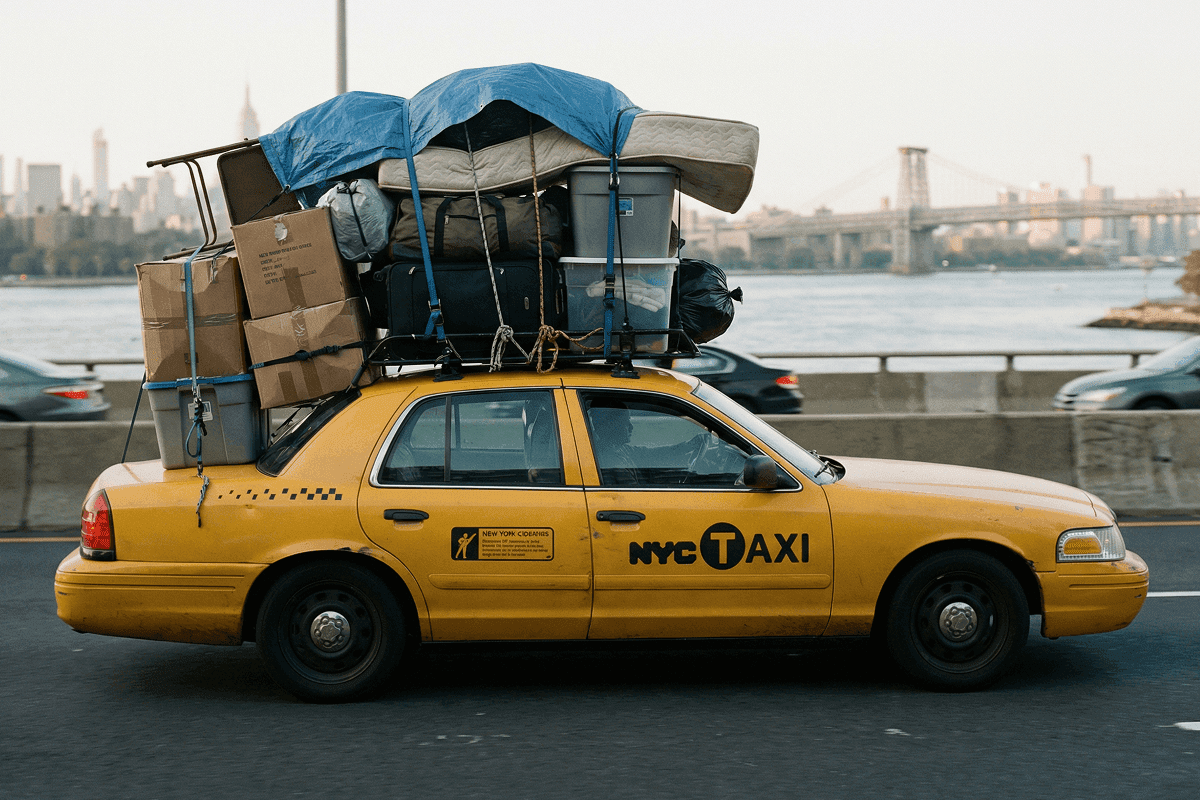
Here's a scenario every New Yorker knows: your apartment is full. You have winter gear from three winters ago, boxes from the last move you never fully unpacked, and a guitar you're definitely going to play again. The bedroom closet is at capacity, the kitchen is borderline, and the idea of cramming one more thing under the bed is just depressing. You Google "self-storage near me NYC," and the results send you to a facility in Long Island City, a warehouse in the Bronx, or somehow, New Jersey. All of them require a car, a Zipcar reservation, and the better part of a Saturday.
For the majority of New Yorkers, that's a non-starter. According to Bloomberg’s coverage of the U.S. Census Bureau's 2024 American Community Survey, 56.7% of NYC households have zero vehicles. In Manhattan, that number climbs even higher. The traditional self-storage model is car-dependent, warehouse-based, out on the city's edge. It was never designed for the way most New Yorkers live.
The good news: there's a better model. Neighborhood-based storage brings your unit within walking or biking distance of your front door. No car, no wasted weekend, no sketchy warehouse vibes. Here's what to look for and how to find it.
Why Traditional Self-Storage Doesn't Work for NYC Renters
Let's be honest about how the self-storage industry got built. Large-format facilities, like the Extra Spaces, Public Storages, and CubeSmarts of the world, were designed in an era when cheap land, highway access, and car ownership were assumed. They're engineering marvels of efficiency for suburban markets. For dense, transit-rich cities? They're a square peg in a round hole.
The problems stack up fast for car-free New Yorkers:
- Location friction. Most major storage facilities in NYC are clustered in industrial corridors — Long Island City, Hunts Point, Greenpoint waterfront, Maspeth. Getting there without a car means a subway plus a long walk, or a ride-share that costs nearly as much as a month's storage rent.
- Access friction. Many older facilities require you to check in at a front desk or issue physical keys that you need to keep track of.
- The vibe. There's a reason "sketchy warehouse" is basically a genre. Fluorescent lighting, long echo-y corridors, the faint smell of cardboard and regret. It's not an environment that makes you feel great about the stuff you're keeping there.
- Mental overhead. When getting to your own belongings requires logistics planning, storage becomes a chore. You stop going, lose track of what's there, and the unit becomes a black hole you're paying monthly for the privilege of not thinking about.
Meanwhile, NYC apartments are only getting smaller. According to a 2024 RentCafe report covered by Brick Underground, the average sizes of rental apartments in Brooklyn and Queens built in the last decade shrank by the size of a closet, which is about 20 to 30 square feet. More people, less space, and a storage industry still operating on the suburban model. Something has to give.
What to Look for in Urban Self-Storage
Not all self-storage is the same, even within NYC. Here are the specific things worth evaluating when you're searching for a unit — in order of what matters most for car-free city living.
1. Location: Neighborhood-level proximity, not just borough
"In Brooklyn" is not a useful answer. A facility in Red Hook is miles from Prospect Heights — and there's no direct subway. When you search, think in terms of your neighborhood and adjacent blocks, not the borough. A unit that's a 10-minute walk beats one that's a 30-minute transit commute every time. You'll actually use the former.
2. Access: Phone-based
If accessing your unit requires a physical key, a check-in desk, or an appointment, that friction will add up fast. Look for facilities that grant access via your phone — you receive your access credentials digitally, and unlock the front door and your unit directly from a mobile app or a confirmation link. Need to grab your camping gear before an early train to the Catskills? With phone-based access, that's a two-minute errand.
3. Security: Ask the right questions
Good urban storage should have 24/7 video monitoring at the facility. On the digital side, look for bank-level encryption on all transactions and personal data. Both matter: physical security protects your belongings, and data security protects your account, billing information, and access credentials. Don't assume — ask or check the FAQ.
Need storage?
Check available Urban Stash units near you.
4. Flexibility: Month-to-month with no access fees
City life is unpredictable. You might need storage for three months during a renovation, or indefinitely if you're settling into a studio long-term. Month-to-month leases are the standard for urban storage, but watch for facilities that charge extra for access visits, require long-term commitments, or bury fees in the fine print. The cost you see at booking should be the cost you pay. Period.
5. Protection plans: Coverage that fits your situation
Most reputable storage providers offer built-in insurance or protection plans. Check what's covered (and at what value) and how claims work if something goes wrong. A good provider gives you a protection plan by default with no complicated tiers to shop.
How to Find Storage Near You in NYC: A Step-by-Step Guide
Ready to find a unit? Here's the process, step by step. 1. Search by neighborhood, not city. Start with your specific neighborhood name or zip code. "Self-storage Williamsburg" is going to serve you better than "self-storage NYC." If you're willing to walk 10 minutes, search adjacent zip codes as well — you might find something closer (and cheaper) than you expected. 2. Filter immediately for digital access. Any facility that doesn't mention phone-based or mobile access in its features is likely operating on the old model. Filter those out early. You want to see language like "access your unit from your phone," "keyless entry," or "smartphone access" before you dig deeper. 3. Verify the walk. Don't just check the address — open a map and actually route-check it from your front door. Some facilities list a neighborhood as their location but are actually on the outer edge, near a highway on-ramp, with no sidewalk for the last quarter mile. If you can't comfortably walk or bike it, it's not genuinely walkable. 4. Choose your unit size based on what you’re storing now, not what you might store later. The most common mistake: people rent too large and pay for empty space for months. A 5×5 unit (roughly the size of a large closet) handles seasonal gear, a few boxes, and odds and ends for most one-bedroom apartments. You can always upsize if you need to. Most flexible storage providers make this easy. 5. Book online and get your access credentials by email. With a neighborhood-first, digital-native storage provider, the entire process — browsing, booking, payment, access setup — should happen online. You shouldn't need to call anyone, show up in person first, or wait for a key to arrive in the mail. Your phone handles it all, start to finish.
The Neighborhood Storage Difference
All of the above is why we built Urban Stash the way we did. The neighborhood storage model isn't a niche — it's the only model that actually makes sense for how city people live.
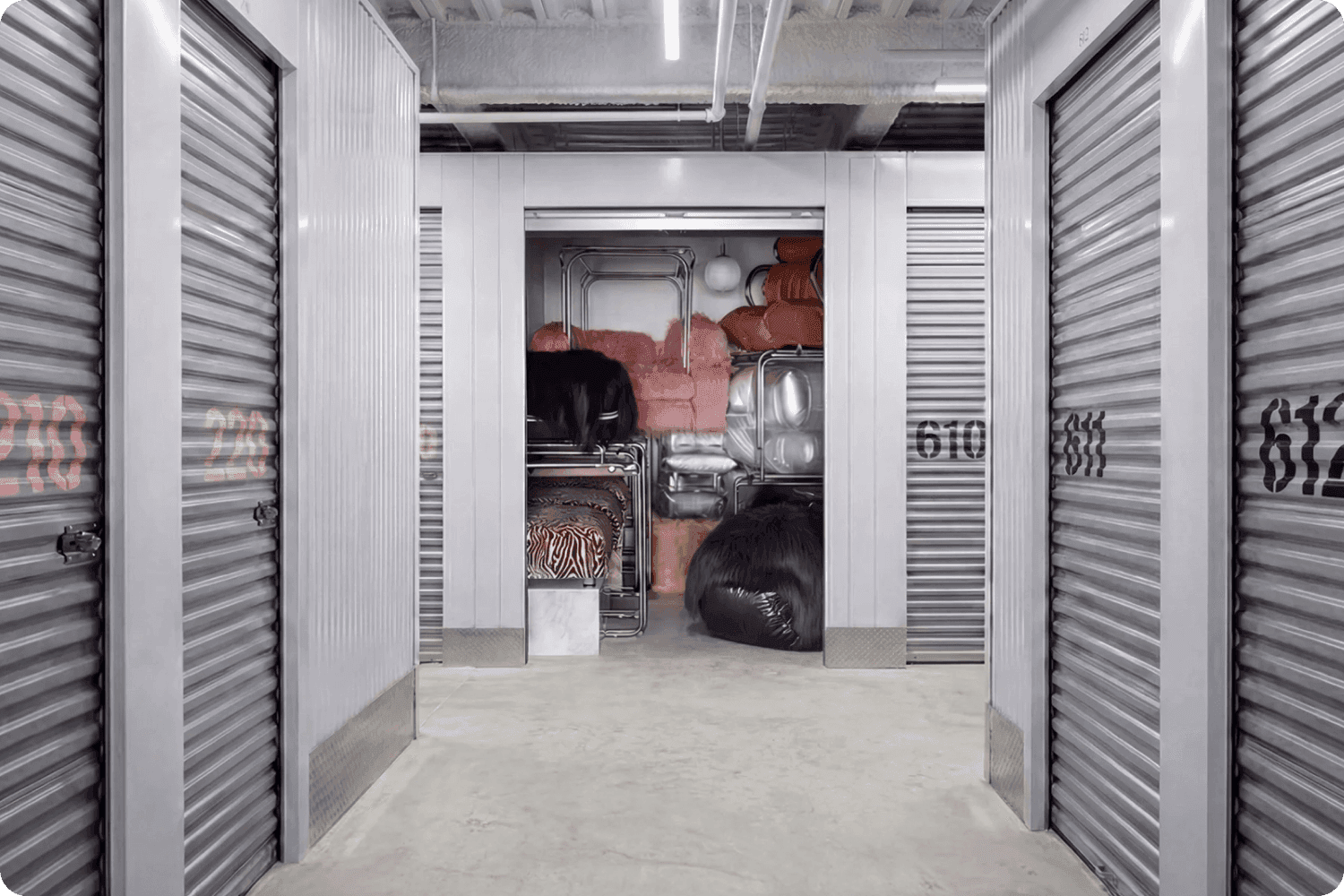
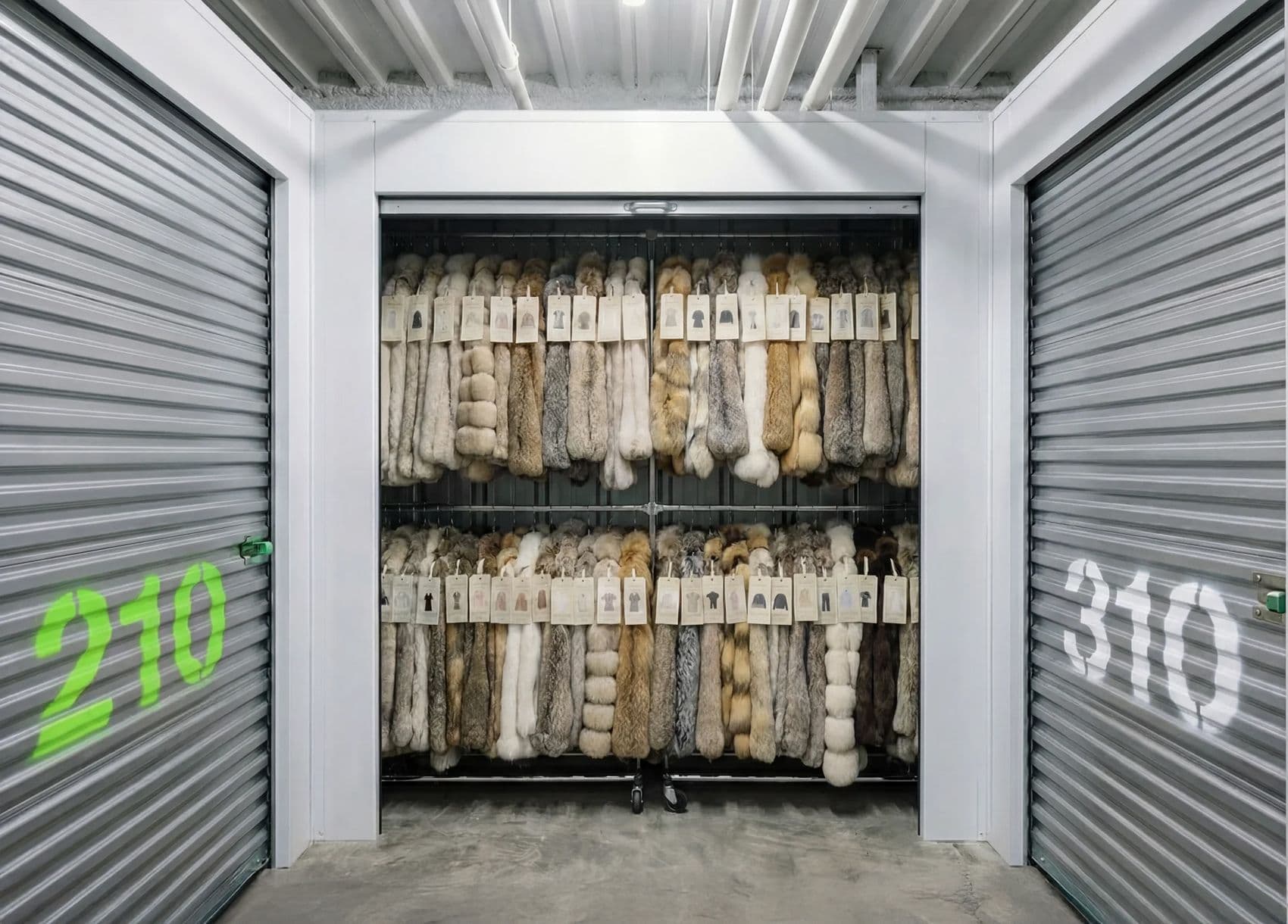
Every Urban Stash location is embedded within the neighborhood it serves, converting underutilized neighborhood spaces into secure, clean, design-forward storage. We're not on the outskirts of anything. Your unit is as close as your local coffee spot — reachable on foot, on a Citi Bike, or on a quick subway stop.
Here's how the Urban Stash experience actually works:
- Find & Book. Search available units by neighborhood and book instantly online. No phone calls, no waiting for a callback, no forms to mail in.
- Get Access. Your access credentials are delivered by email after booking. You use your phone to unlock the front door and your unit directly — no keys, no check-in desk, no appointments.
- Start Stashing. Move in and access your stuff anytime, on your schedule. 24/7 monitoring keeps your unit secure, and bank-level encryption protects your account. No hidden fees for popping in.
We hear the same thing from customers again and again: they didn't realize how much mental energy they were spending on the old storage model until they stopped. When your unit is nearby and the access takes five seconds from your phone, you actually use it. Storage becomes part of how you organize your life, not an obstacle in the way of it.
>"In-unit storage is officially out of fashion." — An Urban Stash customer
We love that quote because it captures something real: the idea that your apartment needs to house everything you own is starting to feel outdated. City living has always been about trading square footage for location, culture, and access. Neighborhood storage extends that logic. You don't need to keep everything in your apartment — you just need to be able to reach it easily when you do.
Storage Should Be an Amenity, Not an Errand
New York is one of the most walkable cities in the world. You can get groceries, coffee, a workout, a haircut, and a great meal within a few blocks of almost anywhere you live. Your storage should work the same way.
The checklist is simple: neighborhood proximity, phone-based access, no hidden fees, solid security, and a fully digital booking process. Find those five things, and you've found storage that actually fits city life — no car required, no weekend sacrificed.
Ready to find a unit in your neighborhood? Browse available units at Urban Stash and see what's available near you today.
Ready for more room?
Find a storage unit that fits your stuff
Browse available units, compare sizes, and reserve online in a few minutes.
Written by
Urban Stash Team
Storage notes, city-living ideas, and practical ways to make more room for what matters.